
If you’re searching for a clearer edge in today’s competitive gaming landscape, this article is built for you. The modern game industry moves fast—new mechanics, balance updates, evolving metas, and shifting esports dynamics can make it difficult to separate hype from practical advantage. Here, we focus on what actually impacts performance: gameplay fundamentals, multiplayer systems, controller optimization, and the strategic layers that define high-level competition.
You’ll gain a breakdown of how mechanics translate into winning decisions, how team-based environments shape outcomes, and how interactive esports strategy influences both casual and professional play. Every insight is grounded in analysis of current competitive trends, observed match data, and proven in-game applications—not theory without context.
Whether you’re refining your fundamentals or aiming to compete at a higher tier, this guide aligns directly with your goal: understanding how modern competitive systems work and how to use that knowledge to improve consistently and deliberately.
Aim can carry you—until it doesn’t. Every competitive player eventually hits the skill plateau, that frustrating tier where flicks are sharp, movement is crisp, and yet the win rate stalls. It feels like training harder should solve it. It won’t.
The real gap isn’t mechanics; it’s coordination. Solo heroics might look like a Marvel highlight reel, but championships are closer to Ocean’s Eleven—precision roles, timed execution, shared intent.
Here’s the shift:
- Information over impulse
- Trading over ego
- Space control over kill chasing
Interactive esports strategy turns five individuals into one adaptive system. Master that, and walls crack.
The Information War: Mastering Proactive Communication
Most teams play reactively. Someone yells, “Enemy spotted!” and chaos follows. Useful? Sure. Optimal? Not even close.
Shift to proactive callouts. Instead of reporting what just happened, announce what’s about to happen: “I’m flanking left in five seconds—expect contact at Alpha point.” Now your team can pre-aim, pre-utility, and reposition. You’ve turned information into coordinated action.
Practical steps to level this up:
- Add timing to every callout. A simple countdown (“pushing in 3”) synchronizes movement.
- Name the objective. Don’t just rotate—say why. (“Rotating to draw utility.”)
- Confirm acknowledgment. A quick “copy” avoids silent confusion (the deadliest debuff in ranked).
Next comes information denial—the flip side of communication. Smokes, flashes, and walls aren’t just for highlight reels. Use them to obscure rotations and delay enemy reads. For example, drop a defensive smoke mid, then quietly stack the opposite site. You’re not fighting players—you’re fighting their assumptions.
Think of it like poker: you win as much by hiding your tells as by playing your hand.
To build alignment, create a shared mental map. Use pings to mark enemy positions immediately. Keep language tight: “Two top mid, one lit 70, spike down.” Avoid storytelling. Clarity beats drama.
Here’s a quick drill:
- Before each round, state the plan in one sentence.
- During the round, update only when information changes.
- After the round, correct misinformation fast.
This is interactive esports strategy in action—less noise, more intent.
Some argue that over-communication clutters comms. True—if it’s unfocused. But structured, forward-looking information wins games. And in tight matches, information isn’t power. It’s victory.
Dynamic Positioning and Team Synergy in Multiplayer
I still remember the first time I truly understood positioning. We were up in a tight semifinal, feeling confident—until our entry fragger got picked. I hesitated instead of holding the trade angle. By the time I swung, the enemy had reset. Round lost. That’s when I learned the “Trading” Imperative.
Positioning in esports means placing yourself close enough to a teammate that if they fall, you can immediately eliminate the attacker—guaranteeing a 1-for-1 exchange at worst. A trade is that instant revenge kill. Without it, you surrender map presence (control over key areas that dictate movement and objectives). With it, you stabilize momentum.
Some argue that overcommitting for trades limits creativity. I disagree. Smart spacing isn’t restrictive—it’s insurance. Think of it like duo choreography: if one dancer slips, the other adjusts seamlessly (and the show goes on).
Executing the Coordinated Pivot
Mid-round adaptation wins games. A pivot is a full-team rotation to a new objective when the original push collapses. Signs you need one:
- Utility exhausted early
- Two defenders stacking your lane
- Communication turning reactive instead of proactive
Call it fast. Decisive comms transform chaos into interactive esports strategy.
Bait and Switch Tactics
The bait and switch is deliberate misdirection. One player draws fire (the bait), revealing enemy positions. Teammates swing wide to secure space or plant uncontested.
Critics call it risky. True—but when timed right, it’s devastating. Pro tip: the bait must survive long enough to feed information, not just ego-peek. In multiplayer, synergy beats solo heroics every time.
Tempo Control and Psychological Warfare
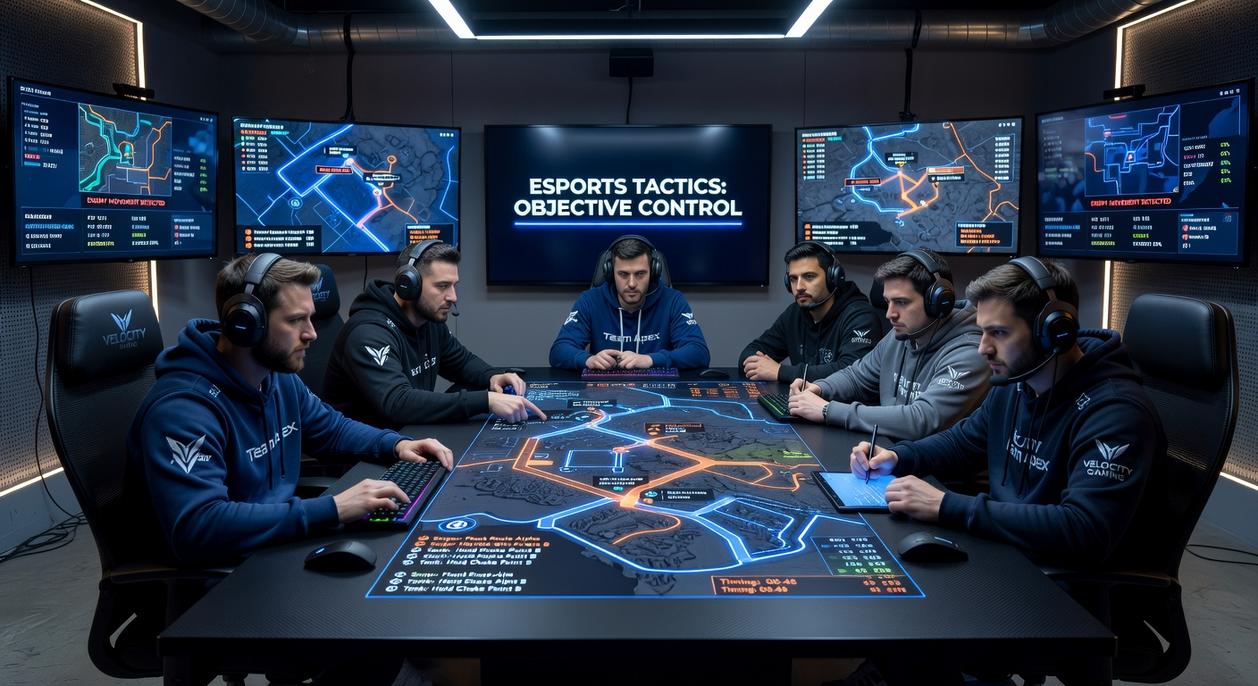
Great teams don’t just play the game—they play you. Tempo control is the art of manipulating the speed and rhythm of a match to bend your opponent’s decision-making until it snaps (politely, of course).
Conditioning Your Opponents
Early rounds are your setup. Run a predictable push. Repeat it. Make it boring. When they start pre-aiming that corner like it’s rent-free housing, you flip the script with a hard counter in the final round. That’s conditioning—training rivals to expect one outcome so you can deliver another. Think of it as Pavlov, but with flashbangs.
Dictating the Pace of Play
- Speed up against slow, methodical teams to overload their comms and force rushed rotations.
- Slow down versus hyper-aggressive squads and let their impatience create openings.
- Disrupt rhythm right after a timeout, when expectations reset.
Some argue pace should stay consistent to maintain team comfort. Fair. But predictable tempo is readable tempo—and readable teams lose.
Mid-Game Adaptation
Spot the flanker who always lurks. Call the trap. Exploit the habit. This is interactive esports strategy at its sharpest: pattern recognition plus decisive counter-calls. For deeper insights, revisit the role of team communication in high stakes tournaments.
Master tempo, and you’re not reacting—you’re directing the show (and maybe stealing the spotlight).
Optimizing Your Setup for Seamless Interaction
Have you ever wondered why split-second calls feel clumsy on your current layout? Controller and keybind efficiency means mapping essential actions—like pinging or push-to-talk—to inputs you can reach without sacrificing movement or aim. In other words, your thumbs shouldn’t travel cross-country mid-fight (this isn’t Mario Kart).
Meanwhile, hardware for clarity matters just as much. A high-quality headset with a crisp microphone reduces miscommunication, the kind that loses rounds and tempers. Can your squad actually hear you under pressure? Pro tip: test levels before ranked. Tight setups power interactive esports strategy in high-stakes matches consistently.
Integrating Interactive Strategy into Your Gameplay Loop
Mechanical skill wins duels. Instinctive coordination wins championships. Studies of professional League of Legends and CS:GO teams show communication density directly correlates with win rates (University of Chichester, 2021). In other words, teams that talk with purpose, win with purpose.
Many players resist this shift. They argue that solo carry potential matters more. And yes, highlight reels suggest it does. But scrim data consistently shows structured, interactive esports strategy outperforms isolated hero plays over time.
The real hurdle?
- Letting go of ego
- Trusting shared calls
Next session, master one habit: proactive callouts. Build the instinct. Win together.
Mastering the Next Level of Competitive Play
You came here to better understand the evolving dynamics of competitive gaming — from gameplay fundamentals to multiplayer mechanics and the rising influence of interactive esports strategy. Now you have a clearer picture of how these elements connect and why mastering them separates casual players from serious competitors.
The reality is this: falling behind on mechanics, coordination, and optimization doesn’t just cost you wins — it limits your growth in an increasingly competitive landscape. Esports moves fast. Strategies evolve. Controller settings, team synergy, and decision-making frameworks can be the difference between dominance and frustration.
If you’re serious about improving, don’t stop here. Start refining your setups, analyze your in-game decisions, and apply structured interactive esports strategy principles in every match. Study high-level play. Optimize your controls. Communicate with intention.
Ready to elevate your performance? Join thousands of competitive players who rely on our proven insights to sharpen their skills and stay ahead of the meta. Don’t let outdated tactics hold you back — level up your strategy today and turn every match into a calculated advantage.