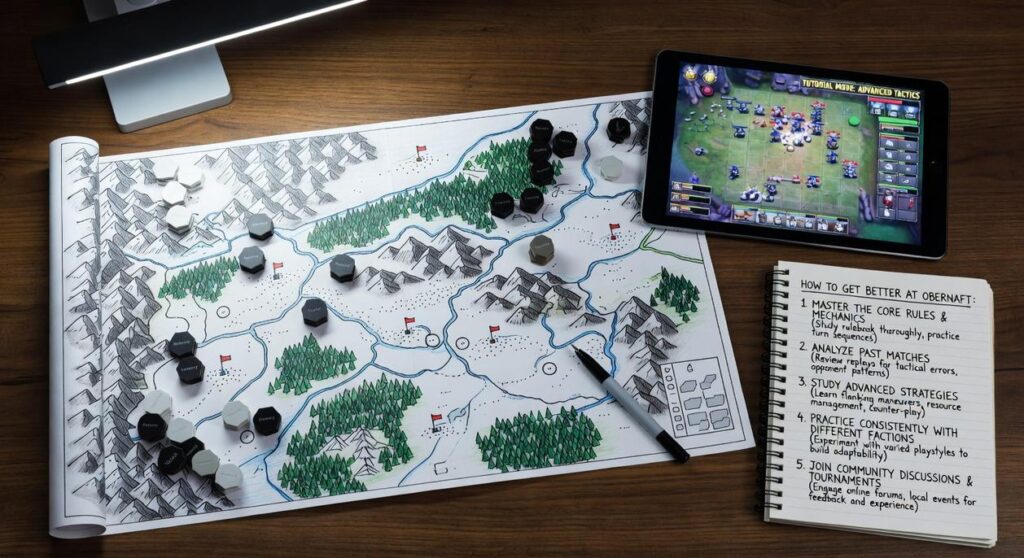
I’ve spent hundreds of hours breaking down what separates good Obernaft players from the ones who dominate every match.
You’re probably stuck somewhere between decent and great. You win some fights but lose ones you know you should’ve taken. And you can’t figure out what you’re missing.
Here’s the truth: the gap between mid-tier and elite isn’t about talent. It’s about knowing which mechanics actually matter and which ones waste your time.
I analyzed gameplay from top players to find the patterns most people miss. The small optimizations that stack up. The fundamentals that everyone talks about but few actually master.
This guide shows you how to get better at Obernaft without the usual generic advice you’ve already heard a dozen times.
We focus on what works in real matches. Not theory. Not what sounds good on paper. What actually wins fights when you’re under pressure.
You’ll learn the core mechanics that matter most, the subtle plays that separate ranks, and the competitive strategies that top players use without thinking about them.
No fluff. Just the specific improvements that will move you up the ladder.
Mastering the Core: Gameplay Fundamentals You’re Ignoring
You’re losing gunfights you should win.
I see it all the time. Players with decent aim who still can’t crack a 1.5 K/D. They blame their teammates or say the game’s broken.
But here’s what’s really happening.
They’re ignoring the fundamentals. The stuff that separates good players from great ones has nothing to do with reflexes.
Some people argue that raw mechanical skill is all that matters. Just click heads faster and you’ll rank up. They think movement tech and positioning are overrated.
Sure, aim helps. But I’ve watched players with average aim dominate lobbies because they understand how to move and when to use their utility.
Let me show you what I mean.
Movement isn’t just about getting from point A to B. When you’re approaching a corner, you need to jump-peek first. This gives you information without fully committing your body. If someone’s holding that angle, you spot them before they can land clean shots on you.
Slide-canceling works differently here than in other shooters. You want to cancel right as you exit the slide to maintain momentum while keeping your weapon ready. Practice this in the firing range until it feels natural.
Now let’s talk about resources.
Aether Shards and Chrono-Cells aren’t just things you collect. They’re your economy. In round two, most players blow everything trying to get an early advantage. That’s a mistake.
Save your Chrono-Cells until round three or four. That’s when the match tempo shifts and having that extra ability charge wins rounds. I learned this the hard way after watching replays of my losses.
The exception? If your team is down 0-2, spend everything. You need to stop the bleeding.
Map control is where most people completely miss the point. Take Ashen Spire as an example. Everyone fights over mid because that’s where the action is. But the real power position is the elevated platform on the east side.
From there, you can see three different lanes and rotate quickly to wherever your team needs help. The verticality gives you angles that ground-level players can’t contest without exposing themselves.
When you’re learning how to get better at obernaft game, start by claiming one power position per map and mastering it completely.
Finally, utility usage.
Kinetic Barriers aren’t just for blocking damage. Throw one at a choke point and watch how the enemy team responds. If they push through immediately, they’re aggressive. If they wait, they’re playing slow. That information alone changes how you position for the next 30 seconds.
Echo Grenades work the same way. Yes, you can use them to flush enemies out. But I use mine to check corners without peeking. Toss it into a room and listen. No hit marker? It’s clear. You just gathered intel without risking your life. Utilizing Echo Grenades in tactical situations can be as crucial as mastering the mechanics of Obernaft, allowing players to gather vital intel while minimizing risk. Utilizing Echo Grenades in tactical situations can be as crucial as the strategic maneuvers of Obernaft, where gathering intel without exposing yourself can turn the tide of a match.
The players who master these fundamentals don’t need perfect aim. They’re already three steps ahead.
The Technical Edge: Optimizing Your Controller and Settings
Most guides tell you to copy pro player settings and call it a day.
That’s a mistake.
What works for a professional who plays eight hours daily won’t work for you. Your hands are different. Your reaction time is different. Your playstyle is different.
Some people argue that settings don’t matter much. They say skill is skill and you’ll adapt to anything. Just pick something and stick with it.
Here’s why that’s wrong.
Bad settings create a ceiling you can’t break through. You might improve for a while, but eventually you’ll hit a wall where your controller fights against you instead of working with you.
I’ve tested dozens of configurations through Obernaft. What I found is that small tweaks make huge differences once you know what you’re actually adjusting.
Button layouts matter more than you think. Tactical lets you crouch without taking your thumb off the aim stick (great for dropshots). Bumper Jumper keeps you mobile during gunfights. If you play aggressive, Bumper Jumper wins. If you hold angles and play defensive, Tactical makes more sense.
Sensitivity is personal but there’s a method to find yours. Start at 5/5. Play three matches. Can you track moving targets? Go up one notch. Are you overshooting? Drop one. Repeat until it feels natural. Most players land between 6/6 and 8/8.
Stick drift ruins your aim. That’s when your crosshair moves even though you’re not touching the controller. Deadzone settings fix this. Bump your deadzone up by 0.05 increments until the drift stops. Don’t go higher than you need though (you’ll lose precision).
Turn off motion blur immediately. It looks cinematic but destroys your ability to track fast movement. Drop shadows to low. You want frames over pretty visuals. If you’re serious about how to get better at obernaft game, you need at least 60fps.
Audio settings win gunfights before they start. Switch to Headphone Boost or whatever your game calls the competitive audio preset. You’ll hear footsteps from twice as far away.
Your crosshair should be static, bright, and small. I use cyan or hot pink (stands out against any background). Dynamic crosshairs that expand when you move? They’re distracting. You want a single reference point that never changes.
Test everything in a private match first. Don’t jump into ranked with new settings and wonder why you’re getting destroyed.
Advanced Multiplayer Mechanisms & Team Dynamics
Most players think they understand spawns.
They don’t.
I’ve watched countless matches fall apart because teams treat spawn logic like it’s random. It’s not. In modes like Domination, the game follows clear patterns. If your team holds A and B flags, enemies will almost always spawn near C. Flip a flag and the whole system shifts.
Here’s what I actually do. I watch the kill feed and check which flags we control. That tells me exactly where the next wave of enemies will appear. It’s not magic. It’s just paying attention.
But knowing spawns is only half of it.
The way most teams communicate is broken. Someone yells “enemy left” and expects that to mean something. Left from where? Are you engaging or retreating? I have no idea what you want me to do with that information.
I prefer what I call intent-based comms. Instead of just calling out positions, tell your team what you’re doing. “I’m pushing left to draw fire” or “Holding right, need backup in ten seconds.” Now I know how to support you. I go into much more detail on this in Is Obernaft Coming Out in 2023.
And that brings me to trading.
If you go down and your teammate doesn’t immediately kill the guy who got you, that’s a failed trade. The enemy gets a free kill and keeps pressure on your team. When I play, I stick close enough to teammates that if they die, I’m already aiming at whoever shot them. (This is how to get better at obernaft game, by the way. Stop playing like it’s a solo mission.)
Some people say trading is too passive. They want everyone fragging out and chasing kills. But watch any high-level match and you’ll see the opposite. The best teams play off each other.
Now let’s talk about tempo.
You just wiped three enemies and pushed them back to spawn. What do you do? Most teams keep sprinting forward until they run into a full squad and get destroyed.
I slow down. Call for a regroup. Let the team set up properly before the next push. There’s a time to be aggressive and press advantages. But there’s also a time to take a breath and coordinate.
The difference between good teams and great ones? Knowing which moment is which. You can’t always be at full speed. Sometimes controlling the pace means hitting the brakes.
And honestly, that’s the part nobody wants to hear. Everyone wants to feel like they’re constantly making plays. But the smartest play is often doing nothing for five seconds while your team gets in position. In the heated arena of competitive gaming, players often overlook the strategic pauses necessary for victory, much like the debate surrounding Why Obernaft Can’t Play on Pc, where understanding the game’s tempo can make all the difference. In the fast-paced world of competitive gaming, understanding the importance of strategic pauses is crucial, which is why Obernaft can’t play on PC, as he often rushes into action without allowing his team the time they need to position themselves effectively.Why Obernaft Can’t Play on Pc
That’s what separates players who win from players who just get a lot of kills.
Adopting an Esports Mindset: Strategy & Mental Fortitude
Everyone tells you to just play more.
Grind those hours. Put in the reps. Eventually you’ll get better.
But that’s not how it works.
I’ve watched players sink thousands of hours into games and stay stuck at the same rank. Meanwhile, someone who plays half as much climbs past them because they’re actually thinking about what they’re doing.
Here’s the truth most people won’t tell you. Playing more doesn’t make you better. Playing smarter does. This connects directly to what I discuss in Which Obernaft Character Should I Play.
VOD Review: The Pro’s Secret
Record your games. I know it feels weird at first (like watching yourself on camera), but this is how pros actually improve.
When you review, look for these things:
- Where you died and why
- Utility you wasted or forgot to use
- Duels you took when you should’ve repositioned
The pattern becomes obvious fast. You’re not losing because of bad luck. You’re making the same mistakes over and over.
Anti-Tilting Strategies
This is where most advice gets it wrong.
People say “just don’t tilt” like it’s that simple. But when you’re down 2-10 and your teammate just whiffed an easy kill, staying calm isn’t natural.
So here’s what actually works. After a bad round, take three deep breaths before the next one starts. Sounds basic but your body needs that reset.
And stop trying to win back what you lost immediately. That’s how you make it worse.
Information Warfare
Your minimap tells you more than what’s happening right now. It tells you what’s about to happen.
If three enemies showed bottom and you haven’t seen anyone top in 30 seconds, where do you think they are?
Most players react to what they see. Good players predict what comes next based on what they heard and what the map is showing them.
Audio cues work the same way. Footsteps aren’t just “someone is there.” They’re “someone is rotating from A to mid, which means B is probably open.”
Deliberate Practice
This is how to get better at obernaft game without wasting time.
Stop queuing up with no plan. Each session should have one focus. Not five things. One.
Today you work on crosshair placement. That’s it. You’re not worrying about your movement or your utility. Just where your crosshair is before you peek.
Tomorrow you can work on something else.
The players who improve fastest aren’t the ones playing eight hours a day. They’re the ones who spend two hours working on specific weaknesses.
Structure beats volume every time. And if you’re still figuring out your setup, check out why obernaft cant play on pc to understand how hardware choices affect your practice. As players grapple with the nuances of their gaming setups, many are left wondering, “Why Are Obernaft Closing Down,” especially when it’s evident that the right hardware can make all the difference in performance and practice. As the competitive gaming landscape continues to evolve, many fans are left pondering, “Why Are Obernaft Closing Down,” especially as they witness the impact of hardware and setup on player performance.
Your brain can’t fix everything at once. Give it one thing to focus on and watch how fast you actually improve.
Your Path to Consistent Improvement
You now have a clear framework to get better at Obernaft.
No more spinning your wheels hoping that playing more will magically fix things. You have specific areas to work on.
I know the frustration of being stuck at the same level. You grind for hours and still lose matches you should win. It’s maddening.
But here’s the thing: it’s beatable with a focused approach.
By implementing these technical optimizations, strategic principles, and fundamental refinements, you’re building the habits of a top-tier player. Not overnight, but steadily.
Here’s what you should do next: Pick one area from this guide and own it. Maybe it’s your controller settings or your positioning in team fights. Dedicate your next few sessions to mastering just that one thing.
Don’t try to fix everything at once. That’s how you end up fixing nothing.
Consistent, focused effort is what separates players who improve from players who stay stuck. You’ve got the roadmap now.
Your next session starts with a choice. Make it count. Why Are Obernaft Closing Down.